Skip to content
BRANI & DESI
Back

Come in. Every room remembers.

Reflections Over a Pine-Needle Cocktail with Picasso, Matisse and Klee

Can you make philosophy out of a room?

In a Paris bar, around 1932, a friend pointed at his glass and said you could. This house is the answer, written room by room.

40 pine25 apricot20 turquoise15 ultramarine

The recipe of the house. Measured by eye, not by meter.

Interior with large windows, a green door and colored light falling across walls and floor
Hardcover, ePub and Kindle editions Scroll. The ice is melting.

Paris, around 1932–33. Bar Bec de Gaz, rue du Montparnasse.

First, there was an apricot cocktail

Three young friends share a small table: Jean-Paul Sartre, Simone de Beauvoir and Raymond Aron. Aron, who has been studying Husserl’s new phenomenology in Berlin, points at the glass in front of him.

“You see, my dear fellow, if you are a phenomenologist, you can talk about this cocktail and make philosophy out of it!”

Raymond Aron to Jean-Paul Sartre, as remembered by Simone de Beauvoir in The Prime of Life

Beauvoir remembered that Sartre turned pale. Here was a philosophy that took the lived world seriously: cafés, colors, hands, weather. If a cocktail could be philosophized, so could a room. A door. A staircase. The green of pine shade at four in the afternoon.

This house borrows the gesture and changes the drink. The apricot becomes a pine needle, the bar on Montparnasse becomes a home among trees, and the question stays the same.

Merleau-Ponty later recalled the painter André Marchand, who, echoing Klee, felt that some days it was not he who looked at the forest, but the trees that looked at him. A house among pines can be read the same way.

Three painters join the table. Each had already done with a brush what Aron asked for over his glass: they had taken appearance seriously.

Picasso

The multiplying gaze. The world from many sides at once, as consciousness actually gathers it.

Matisse

Color you can live in. Not decoration, but light and climate for the body.

Klee

A line going for a walk. Every room here is a poem first and a space second.

A tall pine stands beside a plastered house, its heavy green door open. Light comes through the large windows in colored threads and lands on the walls, the floor, a hand. Every room is also a short poem, so the house can be read as well as walked through.

Phenomenology is a way of looking at a room. Gaston Bachelard, who called the house our first universe, added a way of dreaming in one.

28poetic texts in the book
60illustrations in the book, 25 of them here
131pages, hardcover

Large windows

Touch a color. The room takes it on.

Mysterious traces mark an ancient path

Through the forest where birds sing.
Turquoise breath of morning air.
Awakened life leans toward the earth.

Open the emerald door

The koi-orange light cascades,
Across the glass, a shift, a play;
Where color speaks and shadows sway.

Through Matisse’s eyes. Color is not decoration here, it is climate. Light comes in as colored threads and lands on the wall like paint. Matisse hoped for an art like a good armchair for a tired mind. This one has windows.

Epoché. Husserl’s name for suspending the natural attitude: setting aside what we assume about a room to attend to how it appears. At the green door: this green, this light, this hand on the handle.
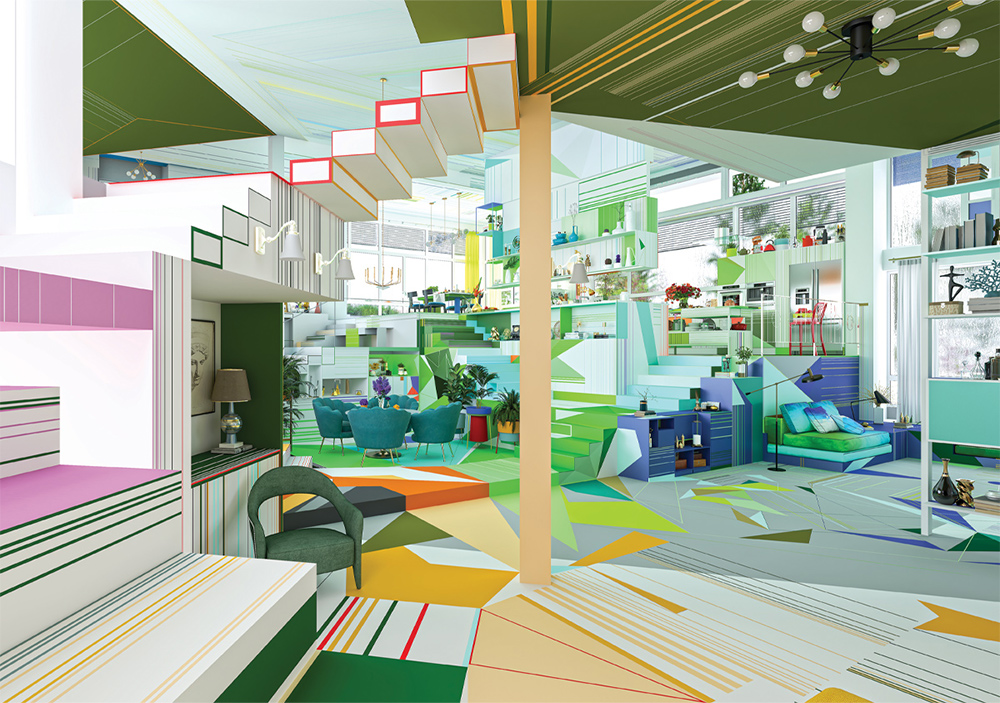
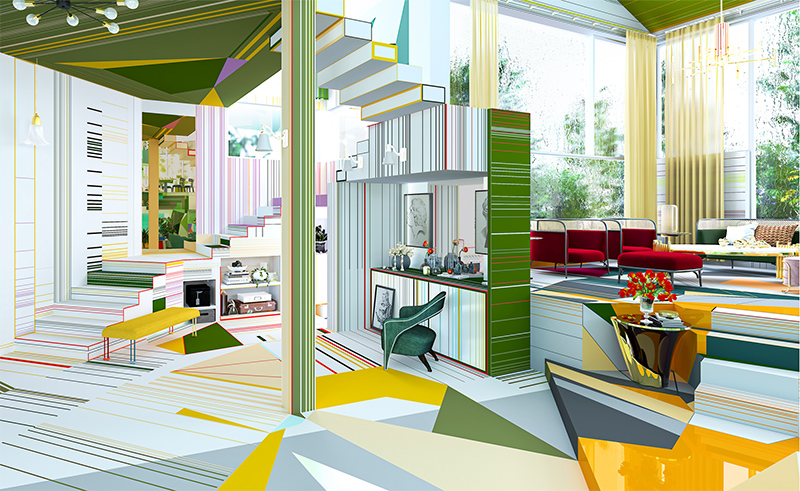
Open-plan house with a green ceiling, floating stairs, teal armchairs and a terraced kitchen
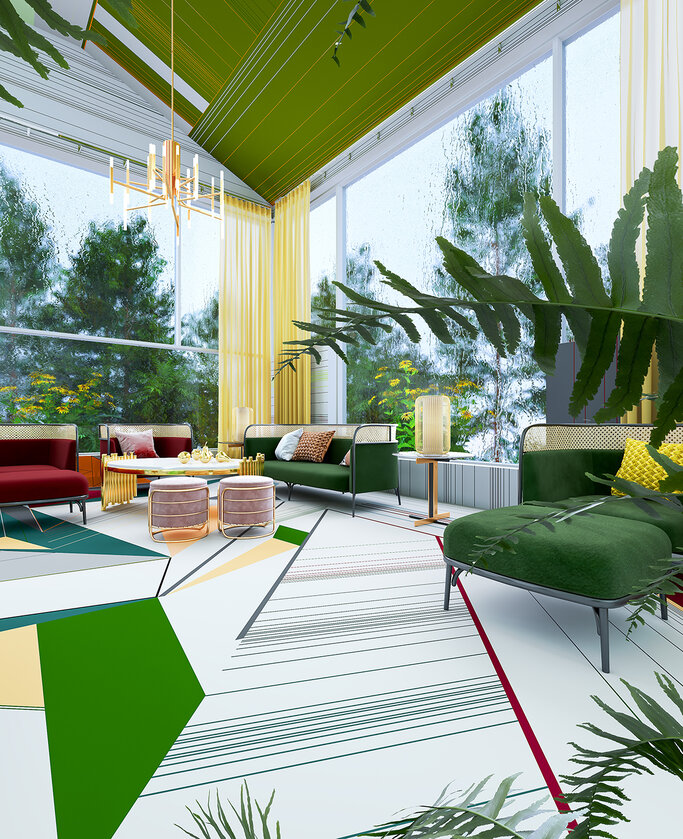
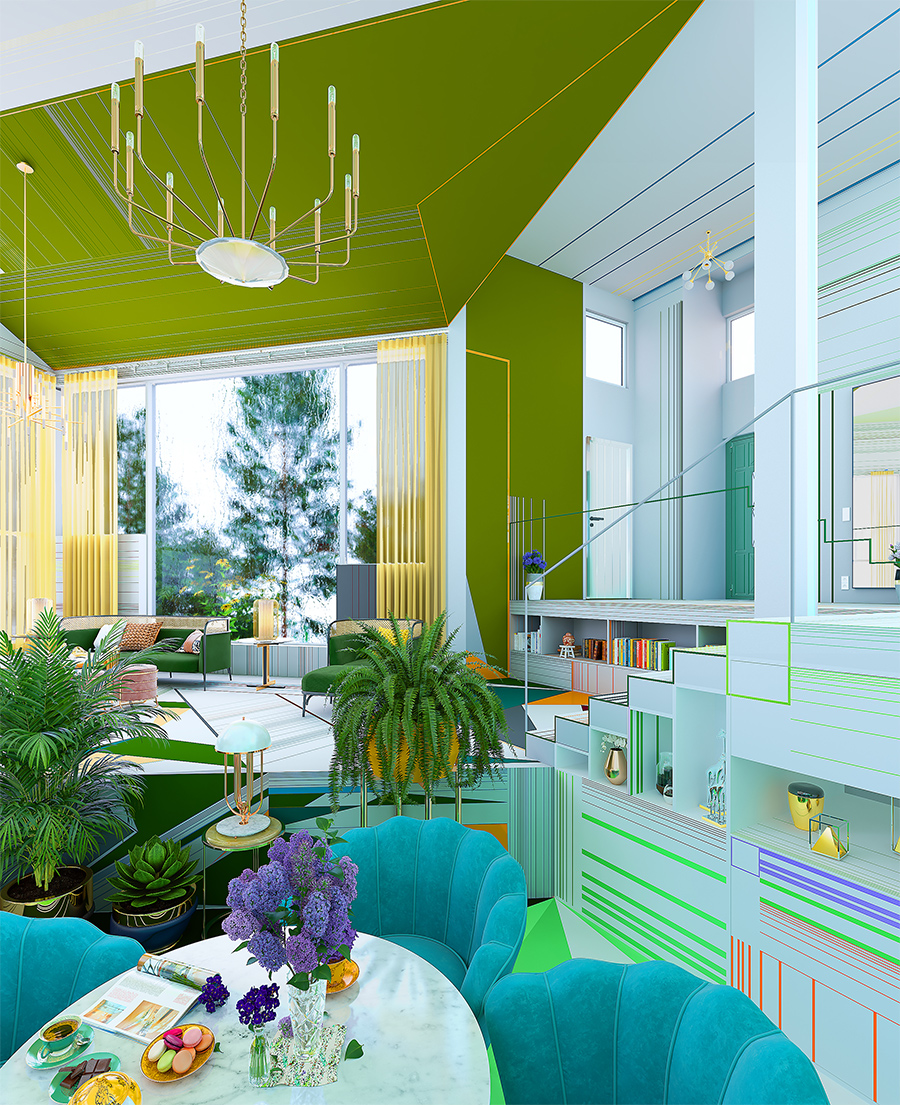
Seating area under an olive-green ceiling with yellow curtains and tall windows facing the pines
Living room with green and burgundy sofas, a brass coffee table and floor-to-ceiling windows onto the trees
View through a green column: floating stairs, a yellow bench, a green armchair and red velvet seating by the windows

Where hues collide

Touch a color. The room takes it on.

In this universe, hues collide

Celeste blue, a quiet stair,
Mint green beckons with gentle flair.
A round table set, stories to share,
Violet tones fill the air.

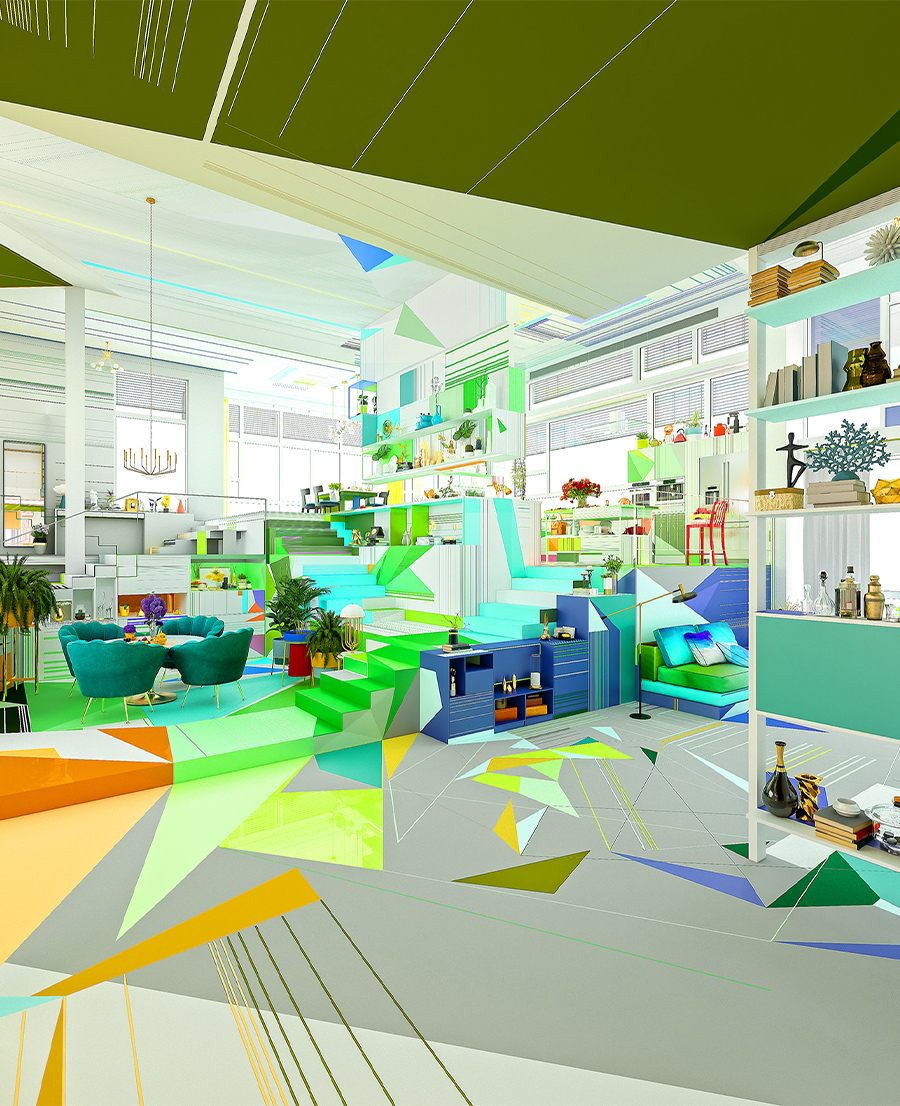
Through Picasso’s eyes. Many sides at once. The floors break into planes like a cubist still life, and floating stairs let each room be seen from several levels before it is understood once.

Adumbration. Husserl’s word for the side of a thing that shows itself while the others stay implied. A room is never seen all at once; floating stairs let you walk around the rest.
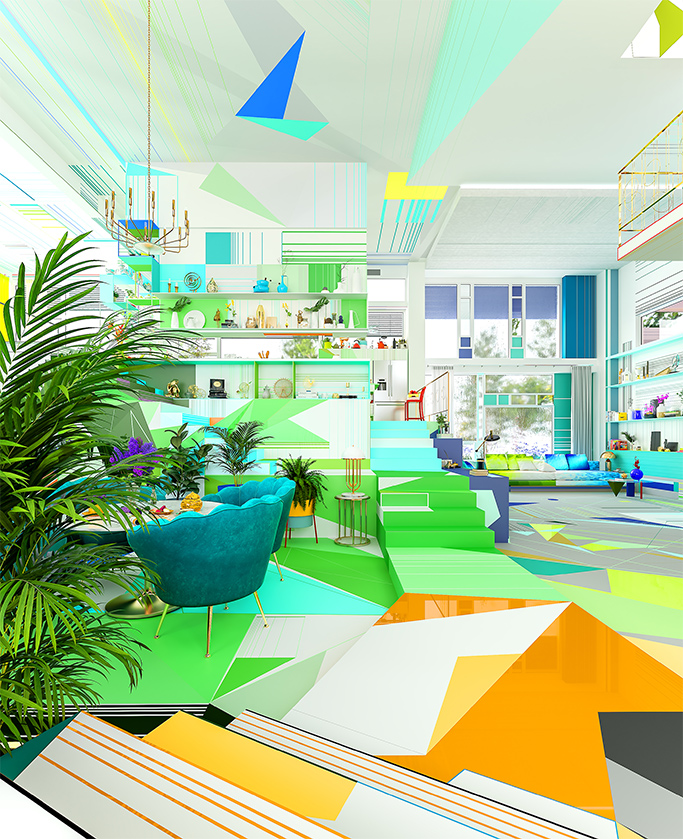
Teal shell armchairs at a round table among palms, with green steps and an orange geometric floor
Terraced interior of green and turquoise stairs, shelves and a blue sofa across a geometric floor
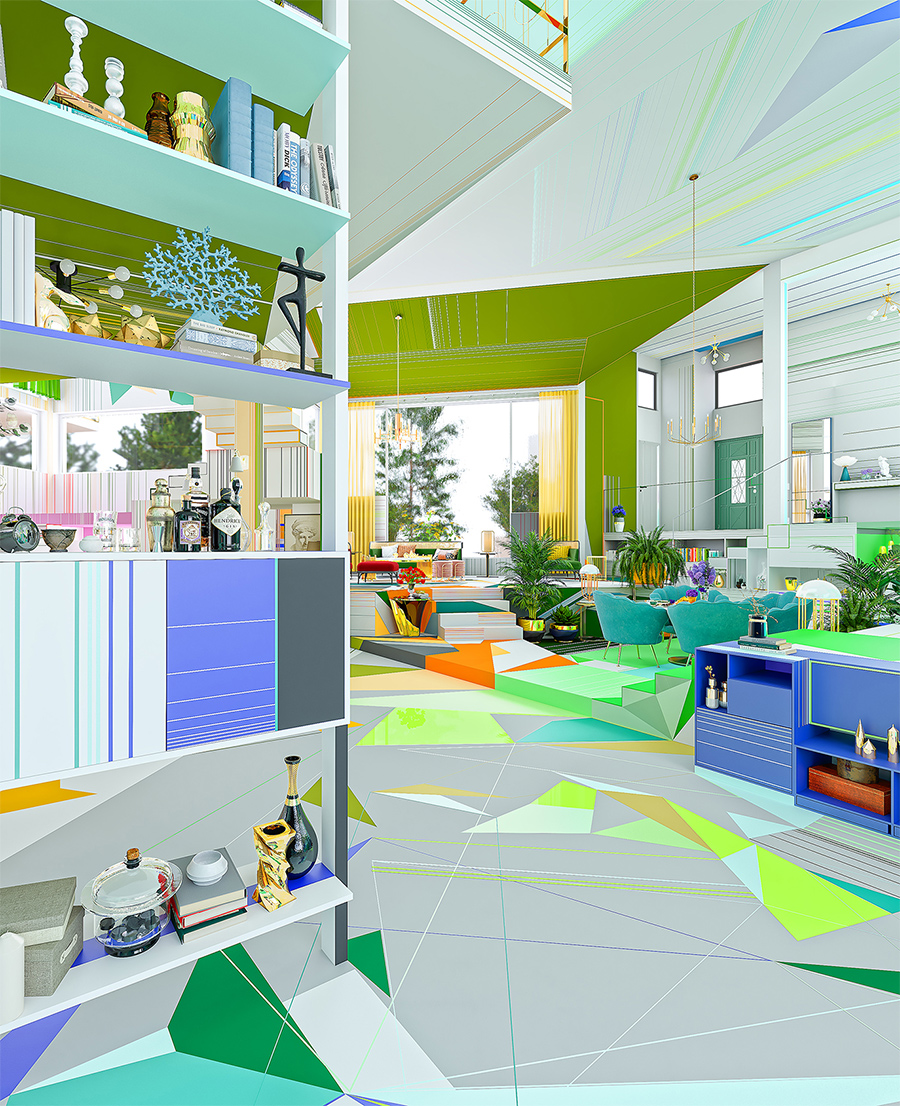
Open shelving in the foreground, the dining area and green-ceilinged living room with the pine view beyond
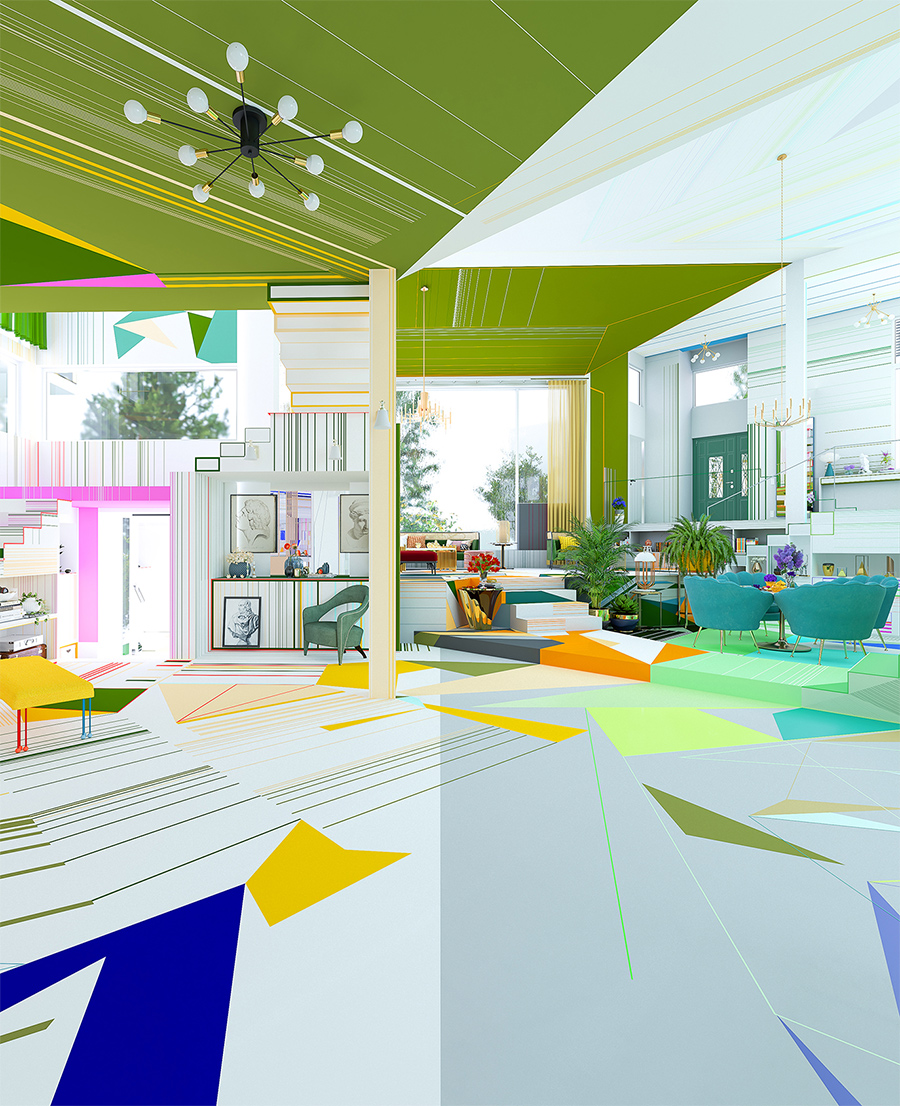
Green ceiling shapes, a pale column, the dining area and the green front door in the distance

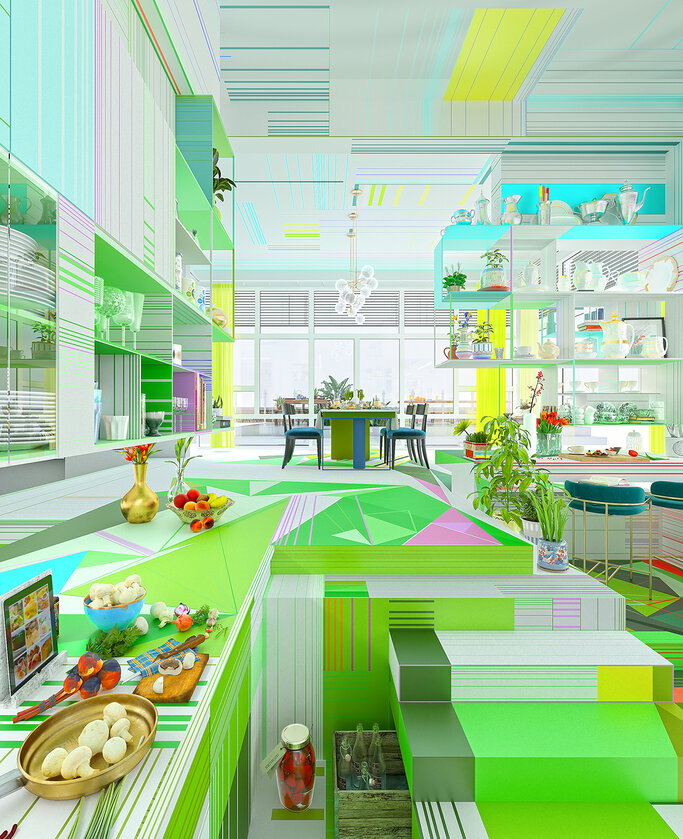
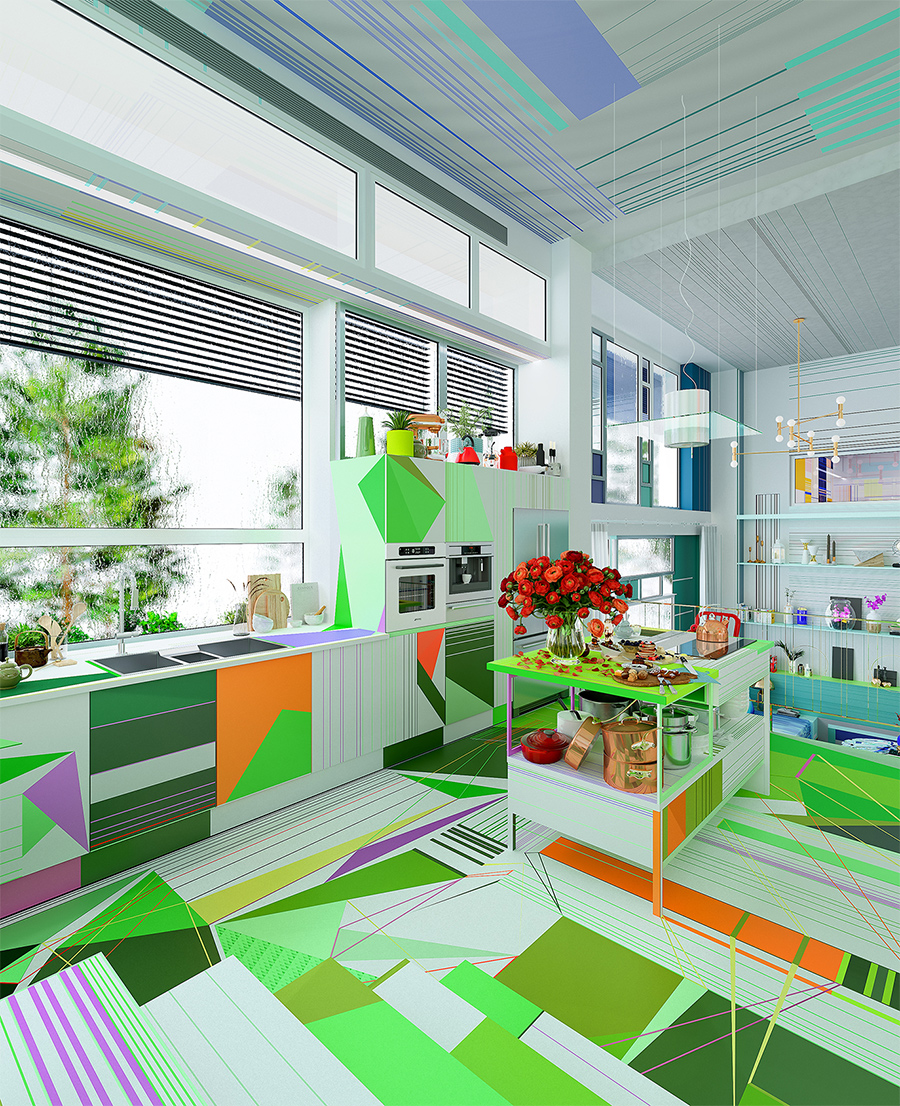
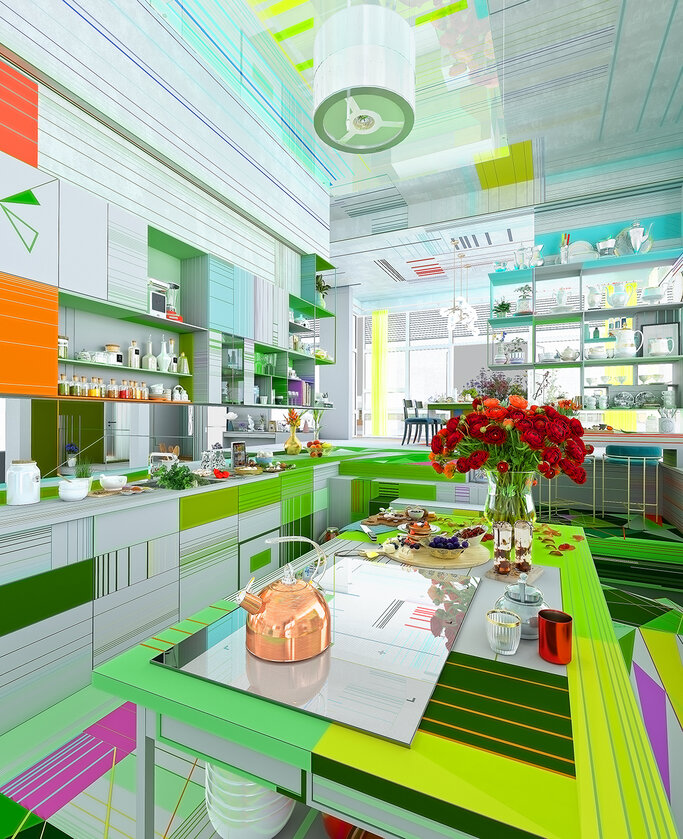
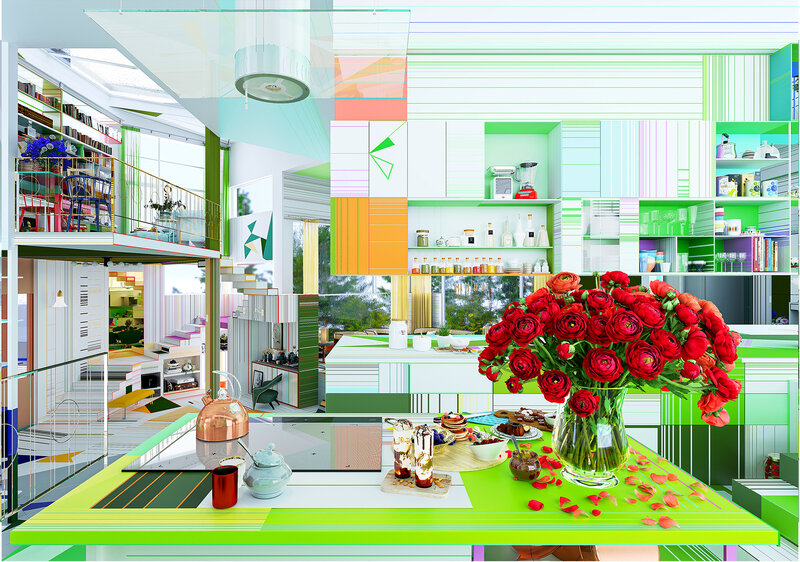
The lemon green kitchen

Touch a color. The room takes it on.

In a kitchen swirled with lemon green light

Oriole orange flickers, igniting delight.
Shades of purple settle, unhurried,
Distant hills soften beyond the glass.

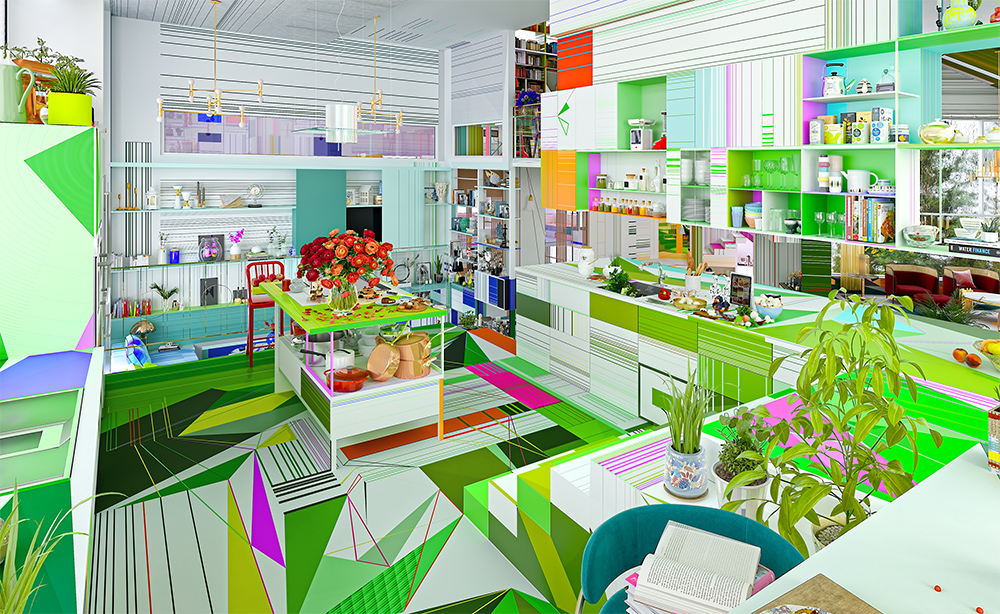
Through Klee’s eyes. Klee built pictures from small squares of color. Here the squares are cabinet doors, and they open.

Lebenswelt. The lived world is kettles, mushrooms and red flowers. Philosophy starts at the counter.
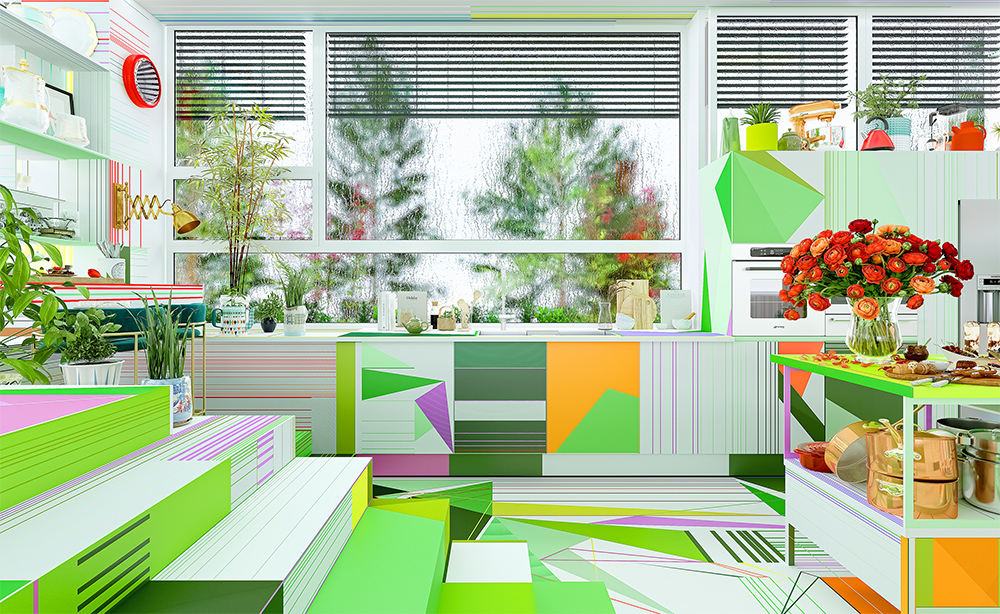
Kitchen with a rain-streaked window onto pines, geometric green, orange and purple cabinet doors, and red ranunculus
Kitchen island with copper pots, glass shelves full of cups and jars, and a geometric green floor
Kitchen counter with mushrooms and fruit, glass-fronted shelves and the dining table in the distance
Kitchen with tall windows, an island of red flowers and copper pots, and a ceiling of blue and turquoise lines
Kitchen with a ceiling lamp, orange and green cabinets and a green island with red flowers
Kitchen island with red flowers and a copper kettle, with the loft library in the background

From “Large Windows”, the first room of the book

I draw. Mondrian’s eyes follow the pencil. Van Gogh stitches his colors one by one. Kandinsky swirls in a whirlwind of color.

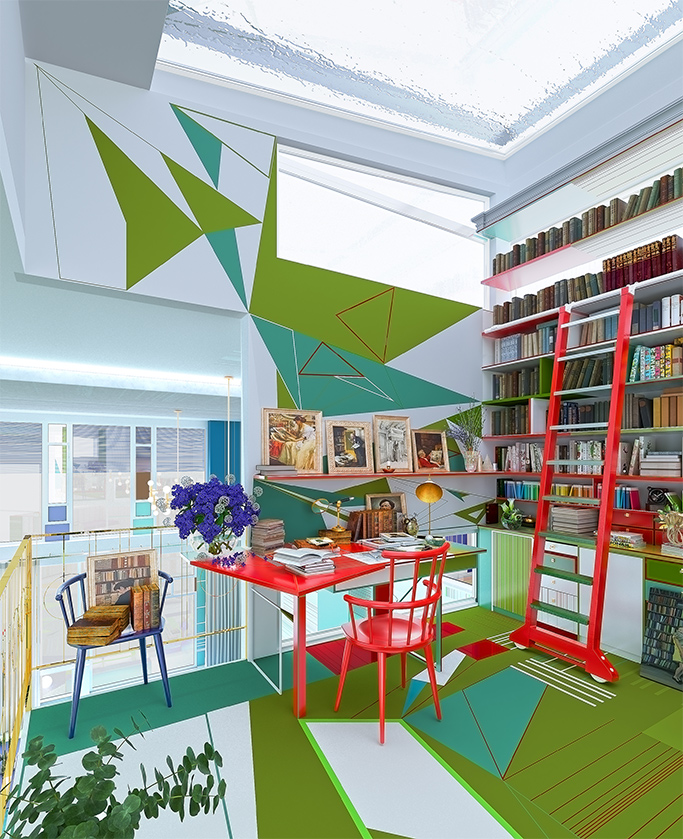
Time seems to stand still. Red and green stare at the sky, which looks back through the glass above.

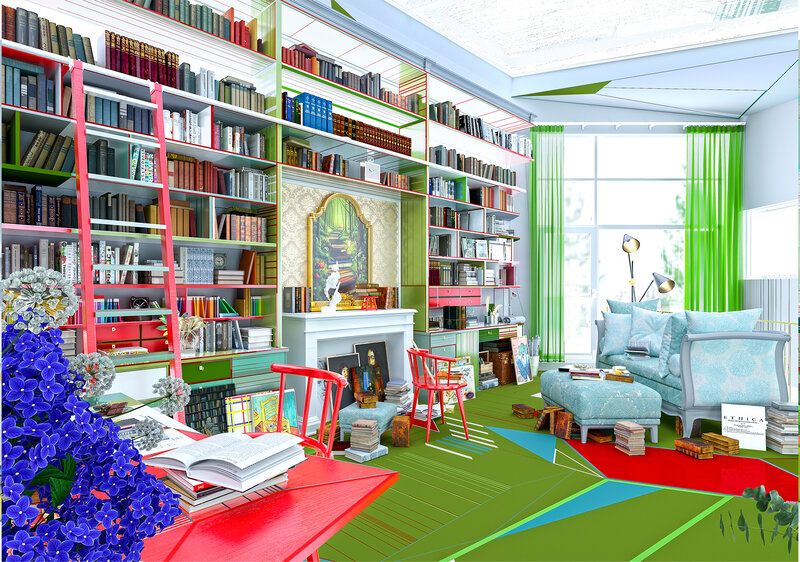
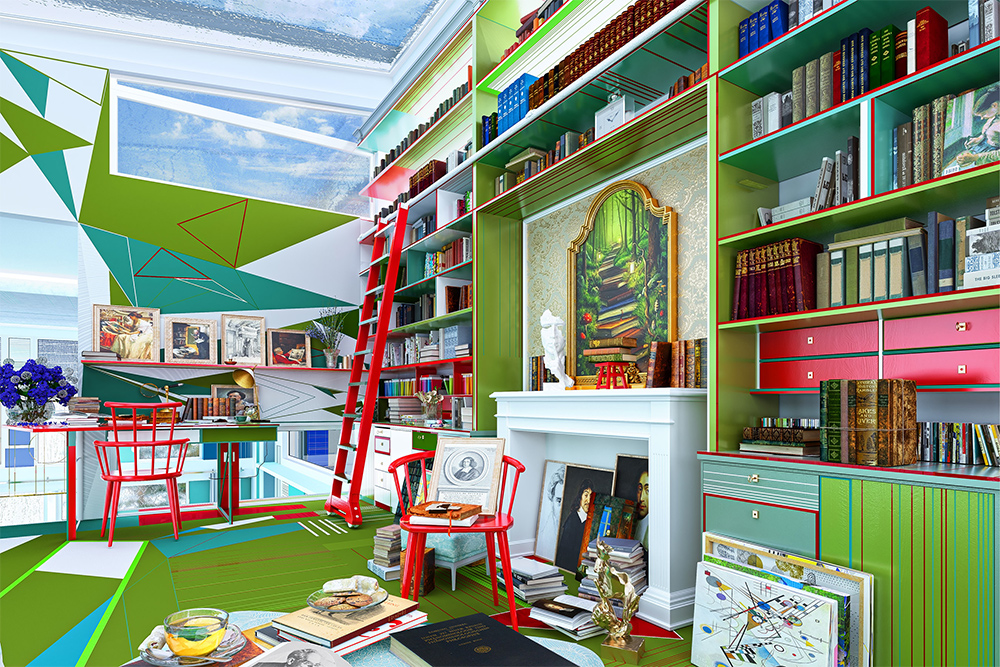
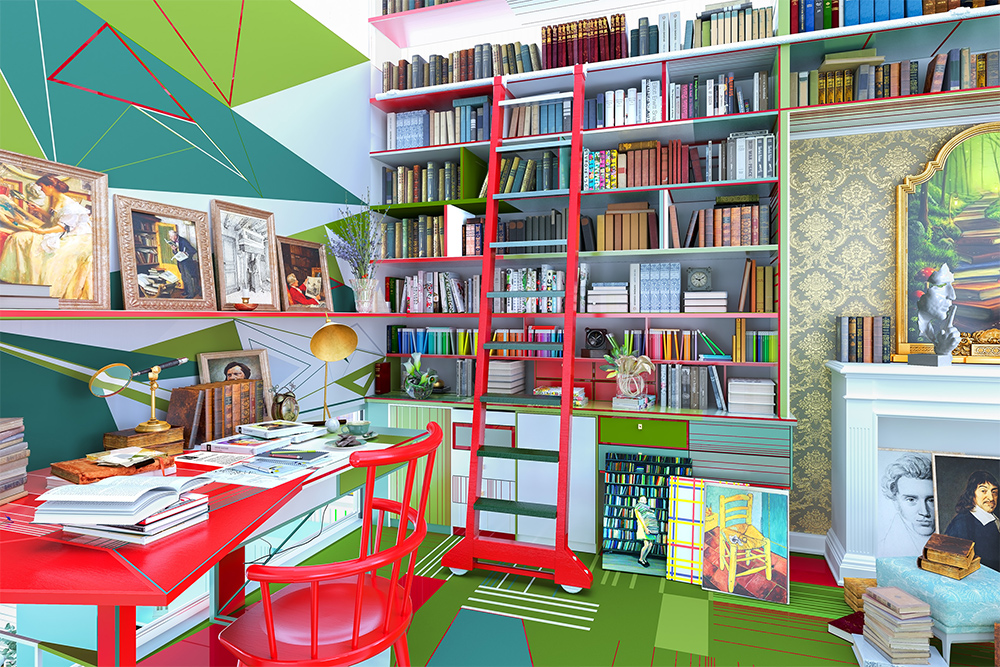
The library tower

Touch a color. The room takes it on.

Upon a tower, steps unfold

In Venetian red and purple glow,
A staircase spirals, stories told,
To the rooms where stillness flows.

In the stillness of a room, where shadows play

Tall wall units cradle yesterday,
Books stacked like dreams on a twilight shelf
Keep stories of worlds into which we fall.

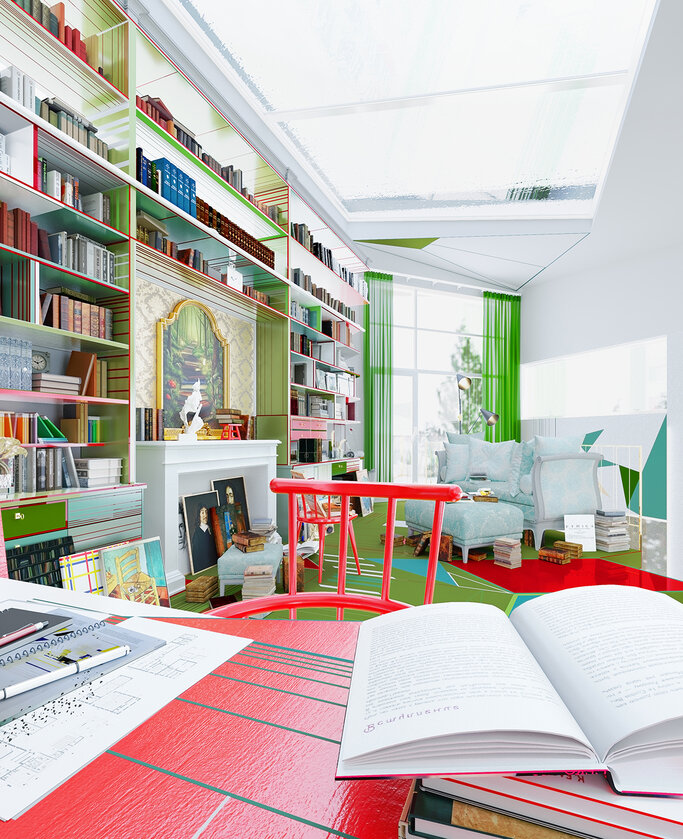
The philosopher in the glass: Sartre. He wrote that he began his life among books, in his grandfather’s study. Here the philosophers’ portraits look out from their frames beside the fireplace.

Intimate immensity. Bachelard’s phrase for how a small, quiet room can open onto something vast. A skylight over a reading chair does it.
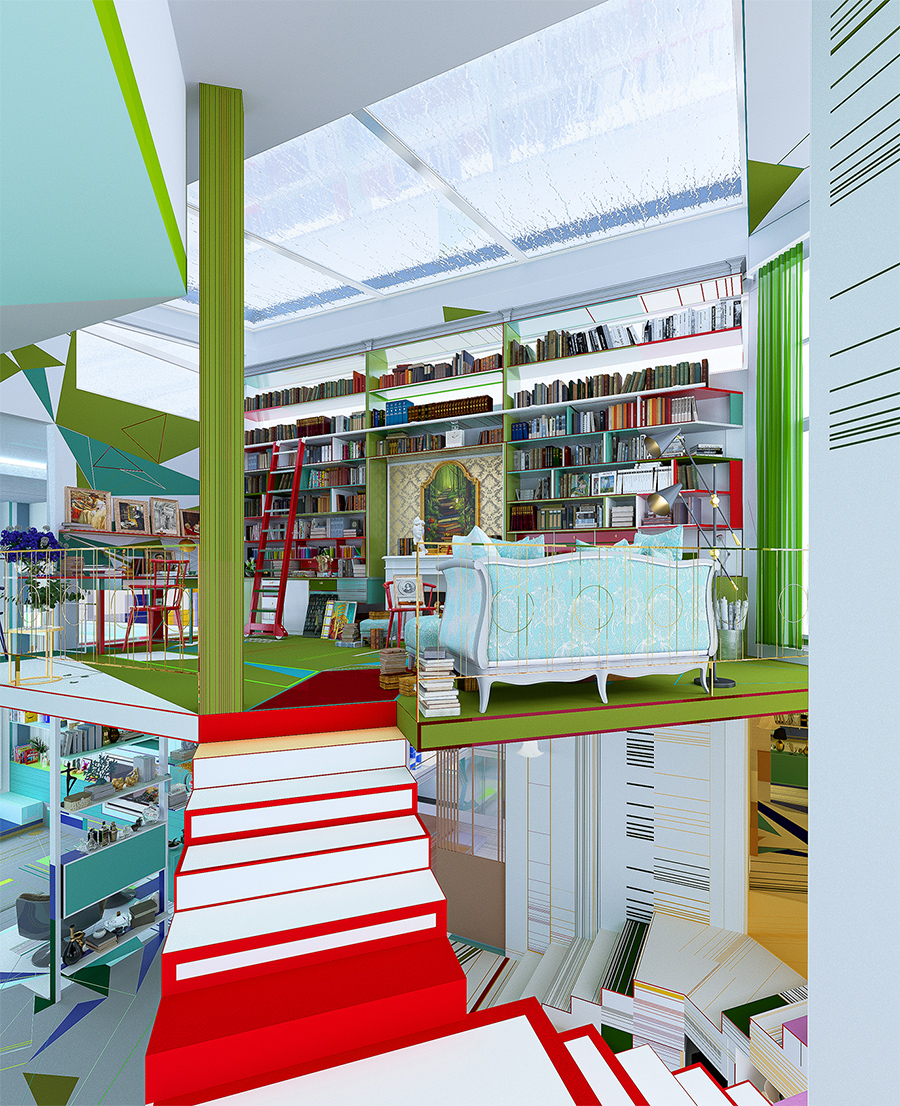
Red staircase rising to the library, with a skylight, a pale blue sofa and walls of books
Library with shelves to the ceiling, a fireplace and an open book on a red desk
Loft library with a red ladder, a red desk with blue hydrangeas and paintings of readers
Library with blue hydrangeas, red chairs, a pale blue sofa and green curtains
Library with a red ladder, a fireplace holding portraits of philosophers, and a Kandinsky print among stacked canvases
Red desk, magnifying glass and open books, with a red library ladder and paintings of readers

Ocean blue sheets

Touch a color. The room takes it on.

In the soft embrace of ocean blue sheets

Spring green comfort weaves into dreams,
Deep indigo and turquoise calm the weary mind,
While furnishings glow in hues refined.

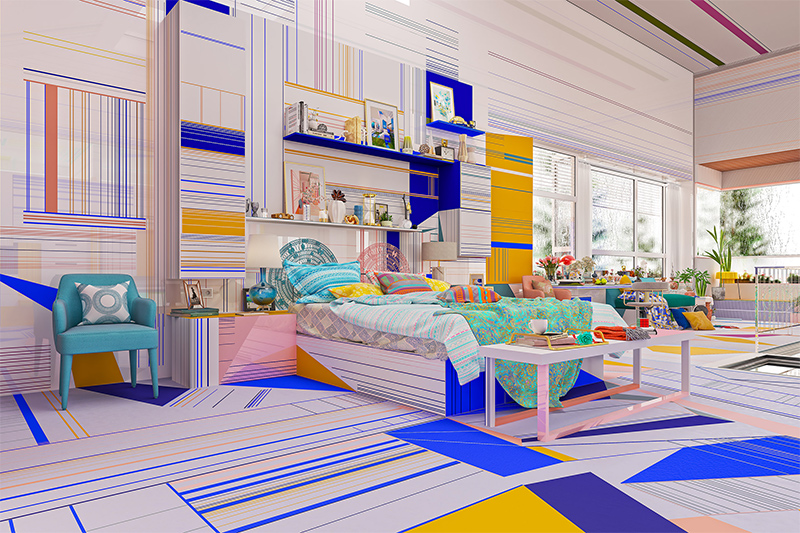
Through Merleau-Ponty’s eyes. Phenomenology of the lived body: we know a room first by sleeping in it, reaching, turning over.

Embodiment. The world recedes, and the body keeps the room.
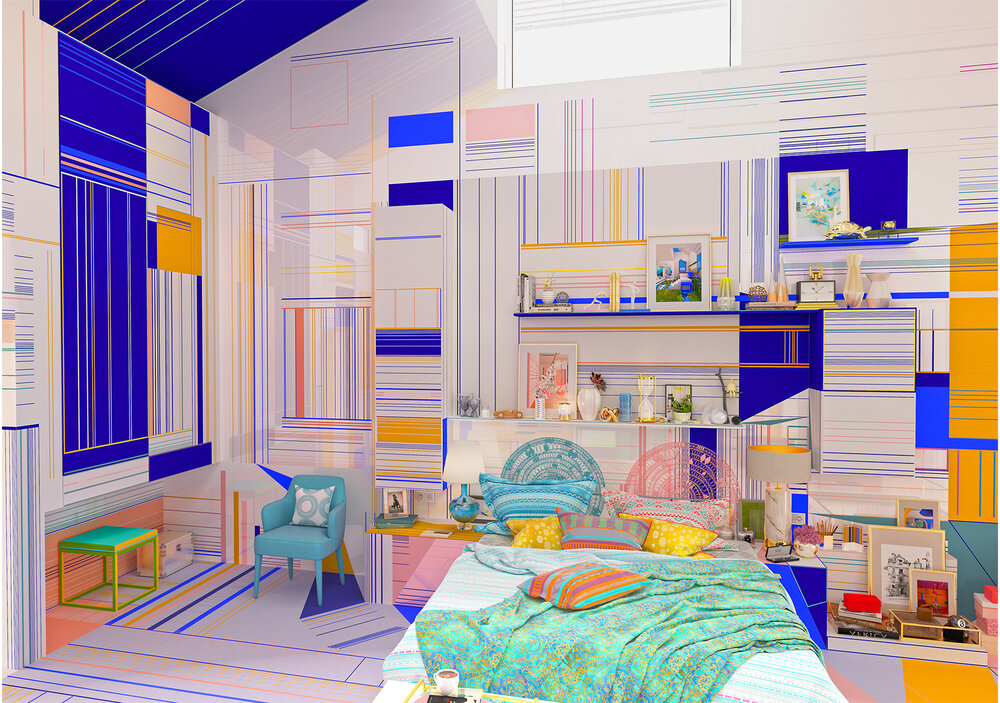
Bedroom in blue, white and orange stripes, with a bed under a turquoise throw, mandala headboards, a turquoise armchair and shelves of keepsakes
Bedroom with a turquoise bedspread, mandala headboards, a blue armchair and shelves of keepsakes against blue and yellow stripes
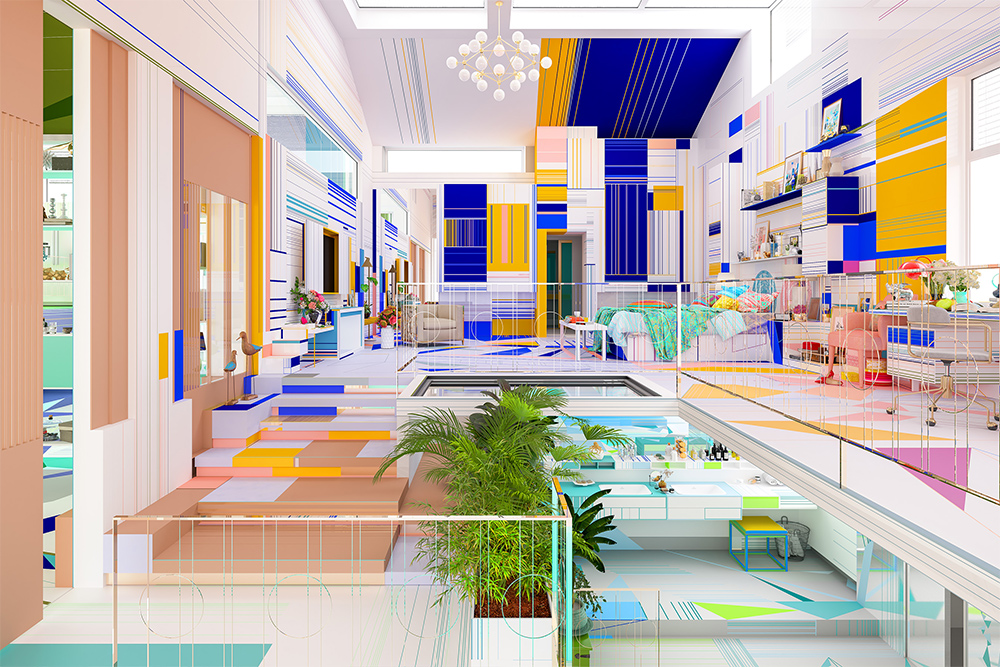
Bedroom gallery above an atrium with palms, blue, yellow and peach stripes, a bathroom below and a chandelier

White and ultramarine

Touch a color. The room takes it on.

A table sprawls in white and ultramarine

Imagination lingers on the edges so bold,
Awakening emerald wishes to unfold.
Words take flight, a lime-green hue.

Aron’s table. Every table is a small agora. This is where the cocktail question gets asked again.

Intersubjectivity. Husserl’s word for a world we share. A room feels lived in once someone else sits down in it.
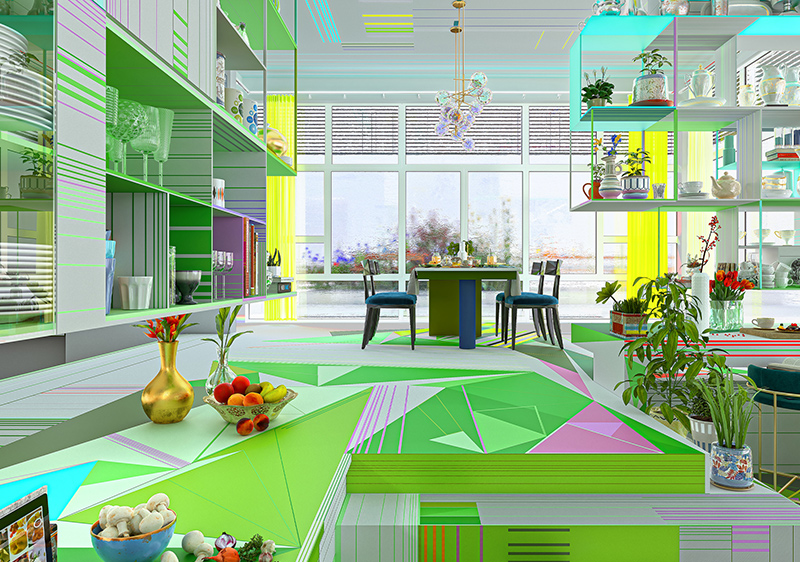
Dining table with blue chairs before tall windows, glass shelves and a geometric green floor

„Zu den Sachen selbst!“

Back to the things themselves. Here the things are turquoise, apricot and pine.

The green door is still open.

And what is in your glass?

About the project

Reflections Over a Pine-Needle Cocktail is an interior concept for a house among pines, and the book of poetic texts and illustrations that grew out of it. In the book, every room has its own colors and its own short poetic text. The philosophy lives here, on this page, where each room also carries one idea. The house is also the first poem.

Authors
Branimira Ivanova and Desislava Ivanova (Brani & Desi)
Project
Interior concept and a book of interior poetry
Book
131 pages · Hardcover
Contents
28 poetic texts and 60 illustrations
Published
December 4, 2024, by Brani & Desi
ISBN
978-6190403777 (ISBN-13), 6190403778 (ISBN-10)
On this page
Husserl, Sartre, Merleau-Ponty and Bachelard read alongside the color of Picasso, Matisse and Klee

Read the house

Every room has its own poetry: color, shape, light, and the things that gather within it. The book follows the house from the open door to the last window, with 28 poetic texts and 60 illustrations. The cocktail, written down.

See the book: hardcover, ePub and Kindle editions
Reflections Over a Pine-Needle Cocktail, book cover